CVM faculty, staff and students participate in annual AAVLD meeting
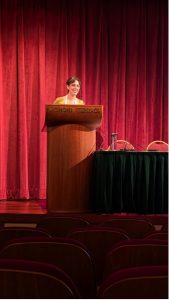
Mizzou’s VMDL was well represented at the 69th Annual AAVLD Meeting in Madison, Wisconsin. See below for their presentations and accolades. We are so proud!
Presentations:
- Stephanie Anderson, Alexis Carpenter: Renal Actinobacillosis in a Foal.
- Zach McAdams, Shuping Zhang: Comparison of two commercially available ELISA tests for the detection of antibodies against Corynebacterium pseudotuberculosis exotoxin in caprine serum.
- Rosalie A. Ierardi, Zhenyu Shen, Tirth Uprety: Detection of Theileria orientalis Ikeda and Chitose genotypes in Missouri market cattle.
- Florencia Sabao-Schneider, Caitlyn Bohannon-Ritchie, Bettina Gentry, Rosalie A. Ierardi: Tularemia in two cats from Cole County, Missouri. Veterinary Student Travel Award Winner!
- Zhenyu Shen, Lifang Yan, Tirth Uprety: Application of metagenomic next-generation sequencing for detection of viruses in bovine respiratory disease samples.
Additionally, our own Jesse Bowman was honored with the Giles Scientific BIOMIC Excellence in Technical Veterinary Microbiology Award. This award recognizes outstanding contributions to technical excellence in veterinary microbiology. Congrats, Jesse!
Next-generation sequencing in veterinary diagnostics: applications in bovine respiratory disease
Next-generation sequencing, particularly metagenomic next-generation sequencing (mNGS), is transforming animal disease diagnostics. Unlike conventional assays that target specific pathogens, mNGS can detect a broad range of microorganisms without prior knowledge of the pathogens. This capability offers new opportunities to investigate complex diseases, identify unexpected or emerging pathogens and better understand microbial diversity. Beyond individual diagnosis, mNGS can support outbreak investigations and help preparedness for emerging infectious diseases. Therefore, mNGS can contribute to protecting animal health and public health through a One Health approach. We are applying mNGS technologies to expand our diagnostic capabilities.
Application of mNGS to Bovine Respiratory Disease
Bovine respiratory disease (BRD) is a leading cause of economic loss in the cattle industry, with viral pathogens serving as major contributors to the diseases complex. Because conventional diagnostic testing relies on predefined targets, it frequently misses unexpected viruses or novel variants. The VMDL applied mNGS to bovine lung samples submitted for routine BRD diagnostic testing to detect established BRD-associated viruses and identify additional viral taxa beyond those targeted by conventional PCR assays.
Study approach
RNA was extracted from homogenized lung tissue and subjected to host ribosomal RNA depletion and sequencing library preparation. Libraries were then pooled and sequenced on the Illumina MiSeq platform. Bioinformatics analysis included quality filtering, bovine host-read removal, de novo assembly, and viral sequence identification.
Key findings
- Detection of established BRD-associated viruses: mNGS detected bovine respiratory syncytial virus (BRSV) and bovine viral diarrhea virus type 1 (BVDV-1), both also detected by routine PCR. PCR additionally detected bovine coronavirus (BCoV) and bovine parainfluenza-3 virus (BPI3), which were not detected by mNGS.
- Detection of additional viruses: mNGS identified sequences representing bovine astrovirus, bovine enterovirus, bovine adenovirus, ungulate tetraparvovirus, bovine parvovirus, bovine polyomavirus, bovine rotavirus, and bovine papillomavirus. Among them bovine astrovirus, bovine enterovirus, bovine adenovirus, ungulate tetraparvovirus and bovine parvovirus have previously been detected in BRD samples and may contribute to the disease’s complex etiology.
Significance
Although mNGS may be less sensitive than targeted PCR for samples with low pathogen abundance, it can detect unexpected or untargeted viruses that routine assays may miss. This broader detection capability is valuable for identifying potential emerging pathogens which pose a threat to animal and public health.
Acknowledgment
This work was supported by USDA-AHFF grant funding (2024–2026). Clinical samples were contributed by the Mississippi State University Veterinary Diagnostic and Research Laboratory.
Case Report: Cryptococcus in an outdoor dog
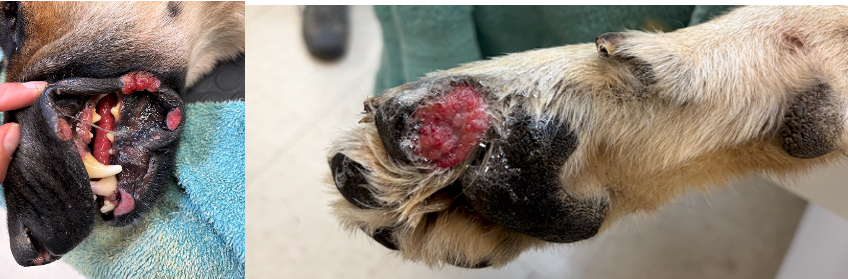
A four-year-old male intact German Shepherd dog presented to his veterinarian for a one-month history of multifocal ulcerative lesions. The lesions were present on the dog’s nail beds, foot pads, face, tongue, eyelid, nasal planum, scrotum and limbs.
Several representative sections of haired skin were submitted in 10% NBF for histopathological evaluation.
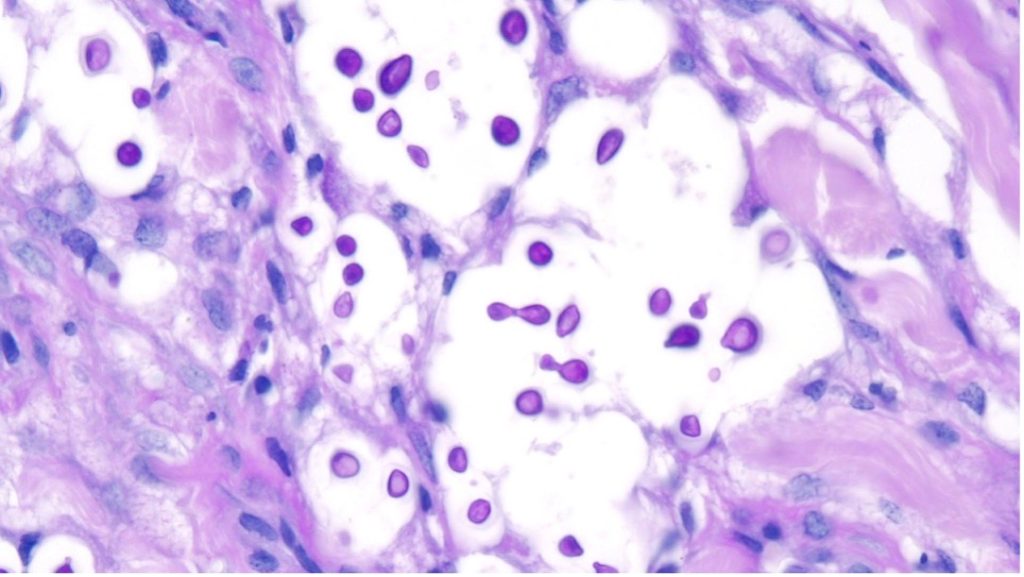
Microscopically, the dermis and hypodermis exhibited diffuse, severe granulomatous dermatitis and panniculitis characterized by sheets of yeast organisms creating a ‘soap bubble’ appearance. The yeasts were round, oval, or occasionally folded, 2 to 10 μm in diameter, featured narrow-based budding, and were surrounded by wide mucopolysaccharide capsules that created prominent clear halos on routine H&E staining. The fungal cell walls were positive on Periodic acid-Schiff (PAS) stain.
Cryptococcus spp. are present worldwide and are found in organic matter such as bird feces. Infection of companion animals often occurs by inhalation of spores and is most common in cats who typically exhibit chronic respiratory symptoms. In dogs, disseminated disease is more common with ocular and CNS manifestations occurring in more than half of cases. Cutaneous lesions can be seen in both dogs and cats starting as papules/nodules that tend to ulcerate as they become larger.
Chronic Wasting Disease testing at the VMDL
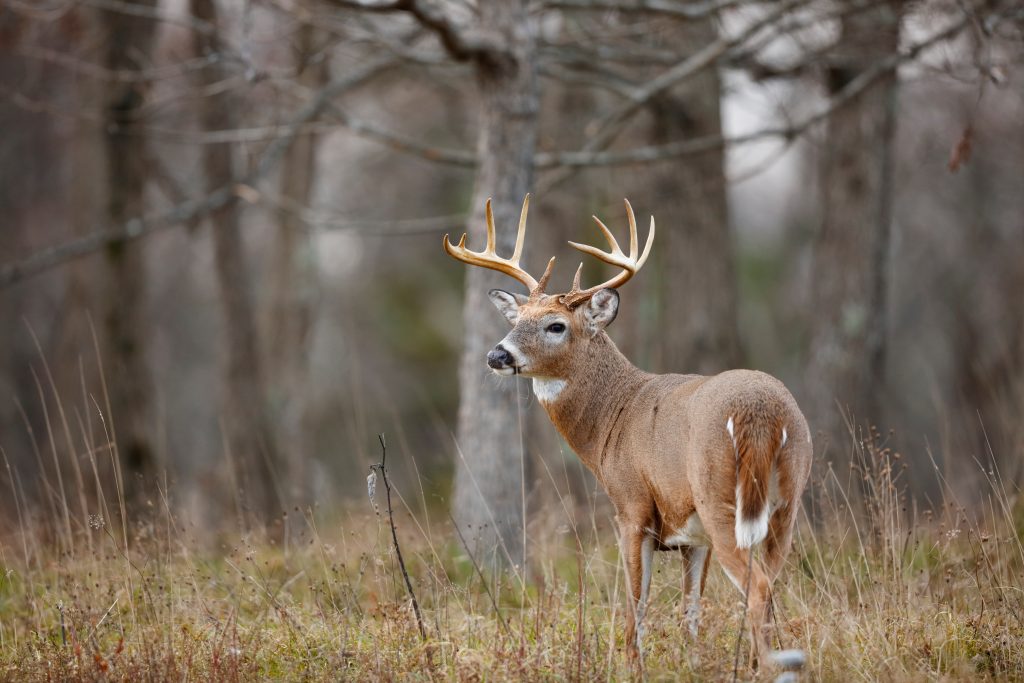
The VMDL performs two types of tests for Chronic Wasting Disease (CWD) in deer. Throughout the year, captive deer herds enrolled in the state-federal CWD Program submit tissues for CWD immunohistochemistry.
During the fall/winter deer seasons, the Missouri Department of Conservation submits hunter harvested wild deer for CWD ELISA testing. Voluntary sampling is available Sept. 15-Jan. 15, and testing is free to hunters. For more information on submitting for free CWD testing, visit MDC’s website. Please note, samples submitted directly to the VMDL will incur a testing charge.
Welcome, Dr. Chris Mandella!
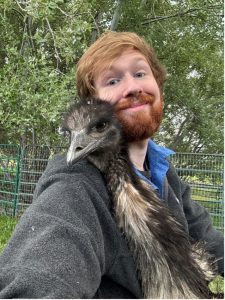
Dr. Chris Mandella has joined the VMDL as a boarded anatomic pathologist working on both mammalian and avian species. We are so excited to have him on the VMDL team! Learn more about Dr. Mandella and his interests below.
Tell us a little bit about your background and what drew you to veterinary medicine.
I originally come from a small dairy community in the Pacific Northwest that is right next to the Pacific Ocean and just a tiny bit south of Canada. Before making my way to Columbia, I spent the past 10 years at Washington State University where I completed my veterinary training and became an anatomic pathologist. A commitment to agriculture, animal well-being and maintaining a secure food system is what initially drew me to veterinary medicine and remains the foundation of my career. My love for animals started with poultry and has been lifelong, starting when I got my first chickens at 6 years old. Since then, I’ve gone on to raise ducks, turkeys, guinea hens, quail, chukar, geese and emus, along with conures, reptiles, fish, rabbits, goats and sheep.
What is your favorite thing about being a pathologist? Is there a particular lesion or disease process that you enjoy working up?
My primary veterinary and diagnostic interests are poultry and food animal zoonotic disease. I also have a strong interest in poultry and dairy cattle management, as well as a side passion for mammalian reproductive pathology. In general, just about any disease affecting any avian or food animal species will get me excited.
My favorite thing about being a pathologist is helping producers, farmers and ranchers identify what issues they are dealing with, regardless of whether it is infectious, nutritional or something else completely unexpected. I find it extremely rewarding to provide timely and accurate diagnostic information for producers to implement the best management practices and help mitigate disease in the herd or flock. I also have a love-hate relationship with parasitic diseases as I love seeing parasites under the microscope, but I can’t say I particularly enjoy dealing with parasite management.
What do you hope to contribute to Mizzou and the VMDL over the coming years?
Over the coming years, I hope to establish strong connections with the poultry industry and allied industries throughout Missouri and the surrounding region while providing accurate, timely and meaningful diagnostic results. I’m especially excited for the opportunity to engage in poultry outreach and education for our region. I also look forward to serving as a resource for the students at the College of Veterinary Medicine, helping prepare future veterinarians to confidently recognize and address poultry and livestock diseases. I believe supporting Missouri’s agricultural community through diagnostics, education and outreach is an essential part of our mission and commitment as a land-grant institution.