

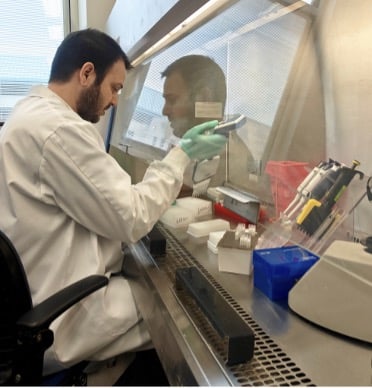
Welcome, Dr. Tirth Uprety!
Dr. Tirth Uprety joined the University of Missouri Veterinary Diagnostic Laboratory in January 2026 as assistant professor and section head of molecular diagnostics. Originally from Nepal, he earned his Doctor of Veterinary Medicine degree from Tribhuvan University before completing an MS in biological sciences/microbiology at South Dakota State University and a PhD in veterinary science at the University of Kentucky. Prior to joining Mizzou, he served as section head of the Next-Generation Sequencing and Molecular Diagnostic Laboratory at the University of Kentucky Veterinary Diagnostic Laboratory and also worked in biotech startup in the field of oncolytic virotherapy (using viruses to target tumors).
Dr. Uprety’s research and diagnostic work integrate molecular diagnostics, genomics and veterinary virology to improve the detection, surveillance and understanding of infectious diseases affecting animals. He has authored numerous peer-reviewed publications on influenza viruses, rotaviruses and other emerging pathogens and is committed to translating research advances into practical diagnostic tools that benefit veterinarians, producers and animal health.

Bacteriology Lab to discontinue contagious equine metritis testing
At the end of calendar year 2026, the bacteriology section will cease offering contagious equine metritis (CEM) culture. Unfortunately, the caseload was insufficient to support the purchase of specialized media in addition to training and validation requirements.
A list of labs approved for CEM testing can be found here: https://www.aphis.usda.gov/live-animal-import/equine/cem We apologize for any inconvenience this may cause.
EIA approved test forms
The VMDL recently began receiving May 2023 paper EIA forms, which are acceptable per VS Guidance 15201.1. As a reminder, the VMDL can accept the following EIA forms:
- VS 10-11 (paper form, May 2023)
- VS 10-11 (paper form, December 2020)
- VS 10-11 (paper form, February 2018)
- VSPS’ electronic form represents VS 10-11, December 2020
- GVL Global Vet Link (electronic form, April 2020)
Versions earlier than VS 10-11 February 2018 should not be used or accepted; discard them. For questions regarding EIA testing, please contact the serology section at 573-882-9280.
Case report: renal actinobacillosis in a foal
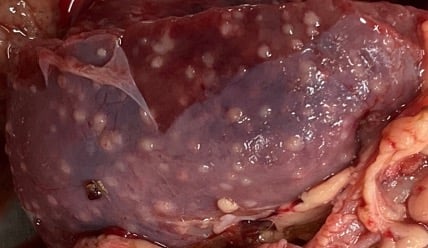
Tissues from an eight-month-old quarter horse filly who presented to the RDVM with fever and abdominal lymph node enlargement were examined at the VMDL. Based on the gross appearance of the kidney (see below), histopathology and bacterial culture were pursued.
Histopathologic examination and bacterial culture confirmed a severe embolic nephritis caused by Actinobacillus equuli, the most common cause of embolic nephritis in horses.
This opportunistic organism causes disease in both adult horses and foals, usually in conjunction with failure of passive transfer or immunocompromise. Sometimes called “sleepy foal disease,” clinical signs in foals include diarrhea, meningitis, pneumonia, nephritis or septic polyarthritis. Adult horses typically present with abortions, nephritis, peritonitis or endocarditis.
The multifocal tan-yellow nodules on the capsular surface of the kidney are a typical gross finding of renal actinobacillosis.
Isolates of public health concern: ESBL-producing enterobacterales
Isolates of public health concern: ESBL-producing enterobacterales
Our bacteriology and mycology section recently started tracking extended spectrum beta-lactamase producing Enterobacterales (ESBL) isolates submitted to the VMDL. These organisms are sentinels of critical antibiotic resistance and include bacteria such as E. coli and Klebsiella pneumoniae. ESBL infections are resistant to many antibiotics including penicillins and cephalosporins.
The VMDL is seeing these organisms crop up in small animal urinary tract and wound infections as well as equine uterine cultures and mastitis milk cultures. This resistance is likely driven by the widespread use of third generation cephalosporins (Excede®, Convenia®) in both large and small animal species. Third generation cephalosporins are WHO critically important antimicrobials and should not be used empirically or prophylactically. Good antimicrobial stewardship and resistance-prevention practices indicate that these drugs should not be used unless:
- Susceptibility testing indicates that they are likely to be effective.
- No less-consequential antimicrobial would be expected to be effective. Less consequential antimicrobials include amoxicillin/ampicillin, macrolides, tetracyclines, sulfas and lincosamides, among others.
Topical treatments should also be considered when appropriate. In food-producing species, third generation cephalosporins may be used for indications not on the label but must be dosed in accordance with the label.
Should you see a comment about ESBL organisms on your bacteriology report, please feel free to contact the bacteriology laboratory at 573-884-9245 for more information.